Brand Consultancy & Delivery
Your business has expertise, capabilities and customer relationships worth building on. I help established businesses put those strengths to work through their brand, supporting the work they want to win, the prices they charge and the opportunities they want to pursue.
Together, we decide what needs to change and carry that direction into how the business presents itself, sells and delivers.
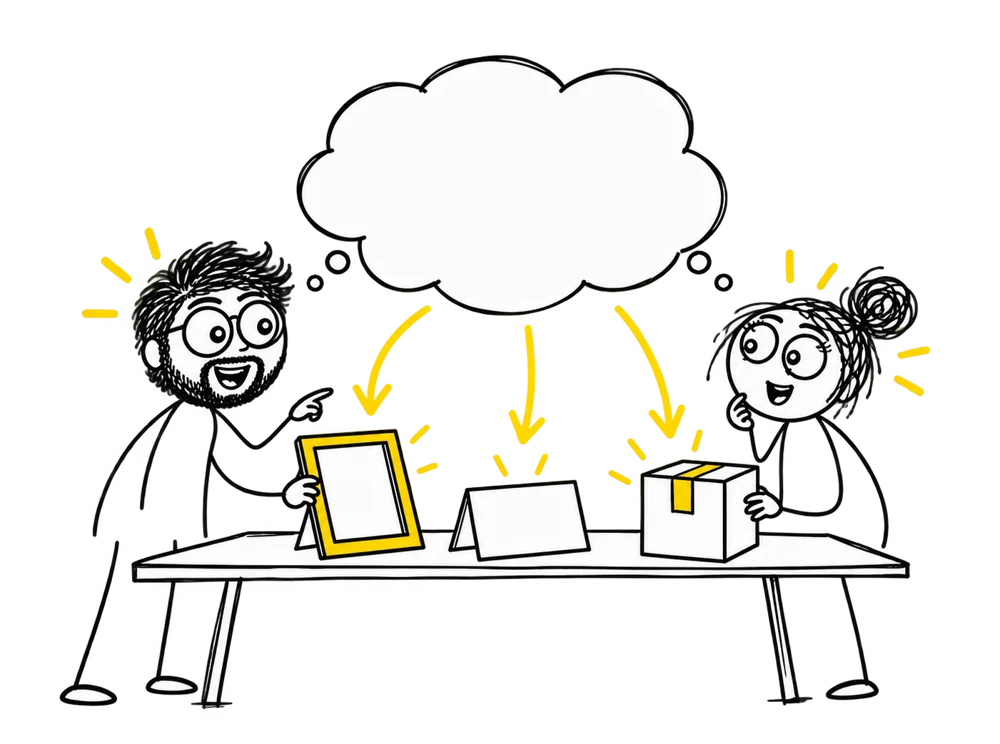
Another head around the table.
Extra hands when you need them.

Customers may know you for only one service, question your price without understanding what sits behind it or overlook you for work you are equipped to deliver. We start by identifying where a change in what people understand, expect or experience could make a useful difference.

Give the customers you want clear, credible reasons to consider and choose you.
Make the value behind your offer and the evidence supporting it easier to assess.
Help new and existing customers understand how your services fit together and where else you could help them.
Demonstrate your suitability for the projects, customers or markets you want to pursue.
Make the experience reinforce what you want the business to be known for.
Give successive pieces of work a consistent direction and recognisable identity to build on.

The thinking, put to work
Elite Home Staging had grown, but its brand wasn’t showing the full business. The leadership team needed to agree how to position the wider offer and what the next stage of growth required.
See the Elite Home Staging project ↗“They elevated my company tremendously.”
“Leads have at least doubled since the rebrand.”
Working with me
I bring an outside perspective to the business, help you make the brand decisions that matter and stay involved as your team puts them into practice. The starting point depends on what you need, including the strategy and work you already have.

We examine what you want to achieve, what customers currently understand and where the evidence suggests the brand could contribute more.
What we look at
Illustrative outputs
Brand opportunity and priority brief
The objective, the perception to change, the decision, how it is applied and how progress is assessed. It gives the engagement a clear commercial purpose. There is a worked example below.
Customer and buying insight summary
What customers are trying to achieve, what prompts a purchase, the alternatives and what gives them confidence. It grounds the brand decisions in how people choose.
Illustrative example
A regional accountancy firm. Clients know it well for year-end accounts but overlook its business advisory service.
We agree which decisions need attention, building on what already works.
What we agree
The scope follows the opportunity. Not every engagement needs every decision revisited.
Illustrative outputs
Positioning and value proposition
Audience priorities, the position, the promise, the relevant differences and the supporting evidence. It gives sales, marketing and creative work an agreed foundation.
Offer and brand architecture map
The relationships between services, products, names or businesses. It makes the offer easier to present, navigate and develop.
We turn those decisions into practical guidance for the people producing and delivering the work.
Examples of direction
Illustrative outputs
Messaging and sales story
The message hierarchy, key claims, evidence, language principles and examples. It helps people explain the business consistently and convincingly.
Creative and digital briefs
The audience, the intended change, the proposition, evidence, constraints and criteria for assessing the work. They give your designers, agency or internal team a useful direction.
Experience priorities and service principles
Important customer moments, gaps between promise and delivery, and agreed improvements. They make the brand tangible through how people are treated.
I work alongside your team and existing partners to carry the agreed direction into your website, identity, proposals, sales conversations and customer experience. Where additional support is useful, I can bring in 9 Designs, the brand, digital and marketing studio I founded.
We agree who is responsible for what, review the work as it develops and assess progress against the commercial objective.
Your own team or agency can carry out the work instead. Using 9 Designs is entirely optional.
What this covers
How we read progress
Pricing, sales, service and market conditions also affect results, so we read the evidence in context.
Illustrative output
Implementation and measurement plan
Priorities, responsibilities, dependencies and agreed indicators. It keeps the thinking connected to delivery and review.
You receive the materials we agree you need. The aim is useful decisions and practical application, rather than a large document for its own sake.
Explore the process in more detail →
These are the frameworks behind the decisions above. They help us examine the whole brand without assuming the whole brand needs changing.
A credible brand connects what the business intends and can deliver with what customers understand, expect and experience. We work through the relevant questions together, building on answers that are already useful.
Internal strategy for the business
The contribution the business wants to make and the reasons it is worth building.
The ambition the brand needs to support.
The character, commitments and strengths that should be recognisable in how the business behaves.
The priorities and principles that help people apply the brand as the business develops.
The capabilities, services and products customers can buy, and how they fit together.
External strategy for the market
The customers and buying situations where the business can offer particular value.
The benefit they should expect and why it matters to them.
The place we want to occupy among the alternatives they consider, supported by credible reasons to choose us.
The identity, language, evidence and experiences through which customers recognise and assess the brand.
A brand is built from eight connected areas. Each one asks a different question of the business.
Positioning
Who are we the right choice for, and why?
We examine customers, buying decisions and alternatives to establish where your strengths offer particular value.
In practice audience priorities, a value proposition and credible reasons to choose you.
Purpose and direction
What do we want the brand to help us build?
We connect the brand with the business’s ambition, beliefs and commitments.
In practice agreed priorities and principles for deciding what fits, what to preserve and where to invest.
Architecture
How should the different parts of the offer fit together?
We examine the relationships between your services, products, names and businesses.
In practice offer maps, naming relationships and a structure customers can navigate.
Identity
What should people recognise and remember?
We establish which visual assets are valuable and what needs strengthening or changing.
In practice a clear creative brief and a distinctive identity system suited to the places customers encounter you.
Language and narrative
How do we explain the value so people understand and believe it?
We connect the position, offer and evidence through useful language.
In practice key messages, a sales story, tone of voice and examples for the team.
Experience
How does the experience give people reasons to believe us?
We examine enquiry, buying, delivery and aftercare against the promise.
In practice customer journey priorities, service principles and specific improvements.
Culture and governance
What helps people represent and deliver the brand well?
We establish the understanding, ownership and support people need to apply the direction.
In practice usable guidance, responsibilities, team examples and proportionate review.
Growth
Where could the brand help create more demand and opportunity?
We assess credible opportunities to reach more customers, introduce an offer or deepen existing relationships.
In practice a focused growth plan connecting audience, offer, experience, communication and measures.
Do we need to work through all eight areas?
No. We consider how the relevant areas connect and agree the scope around the objective, building on useful existing strategy, identity and customer knowledge.
Different business situations put different demands on a brand. The map is a starting point for discussion, not a diagnosis.
An initial view of where the work may need to focus in different business situations. We confirm the priorities from your objectives and the business and customer evidence.
| Brand strategy area | Scaling fast | New leadership / founder stepping back | Merging or acquiring | Moving upmarket / entering a new market | Brand, website or marketing investment | Taking investment | Preparing to sell |
|---|---|---|---|---|---|---|---|
| Positioning | Support | Lead | Lead | Lead | Lead | Lead | Support |
| Purpose and direction | Lead | Lead | Lead | Support | Support | Lead | Support |
| Architecture | Support | Assess | Lead | Support | Support | Assess | Support |
| Identity | Support | Assess | Assess | Support | Assess | Assess | Assess |
| Language and narrative | Support | Lead | Support | Lead | Lead | Support | Lead |
| Experience | Lead | Support | Lead | Lead | Lead | Support | Lead |
| Culture and governance | Lead | Lead | Support | Support | Support | Lead | Lead |
| Growth | Support | Assess | Support | Lead | Support | Lead | Support |
Scroll the table sideways to compare all situations.
A lead priority can mean protecting or applying a strong existing decision. We start by understanding what you have.
Some businesses need to investigate the opportunity and agree the direction. Others already have useful strategic work and need help applying it.
Possible starting points.
For a business that wants its brand to contribute more but needs to understand what deserves attention.
For a change, investment or growth opportunity that raises questions about customers, the offer, positioning or experience.
For a business with useful strategy that needs briefs, materials, implementation support or a stronger connection between the work and the direction.

You do not need a major event underway to make more of your brand, but certain situations make particular decisions consequential.
More people represent the business and the offer may be getting broader. The decision is what customers need to recognise consistently and what your people need in order to deliver it.
We establish which strengths and relationships to preserve, what needs to evolve and how the brand’s value can be explained and delivered by more than one person.
We work through what should come together, what should remain distinct and how customers will understand the combined offer without losing the trust they already have.
We examine what those buyers need, which alternatives they trust and what would make your business a credible choice.
We settle what the investment needs to achieve and communicate, so the people producing the work have a useful basis for their decisions.
We connect the growth ambition with the brand priorities, offer choices and practical work needed to support it.
We make the offer, reputation and customer relationships easier to understand and the brand less dependent on its founder. This supports how the business presents its value. It is not valuation or transaction advice.
We investigate where your existing reputation, capabilities and relationships could support more demand, a wider offer or different opportunities.
Tell me what you want to achieve, what is happening in the business and what you already have in place. I’ll talk it through with you and recommend a useful first piece of work.
Before paid work begins, we agree the scope, who needs to be involved, what you will receive, the timing and the fee. We also agree what progress would look like.

If customers still know you for the work you used to do, or can’t see why your offer is worth the price, let’s look at what your brand needs to make clearer.
Tell me what you’re trying to win and where things are getting stuck. We’ll talk through what might need to change.