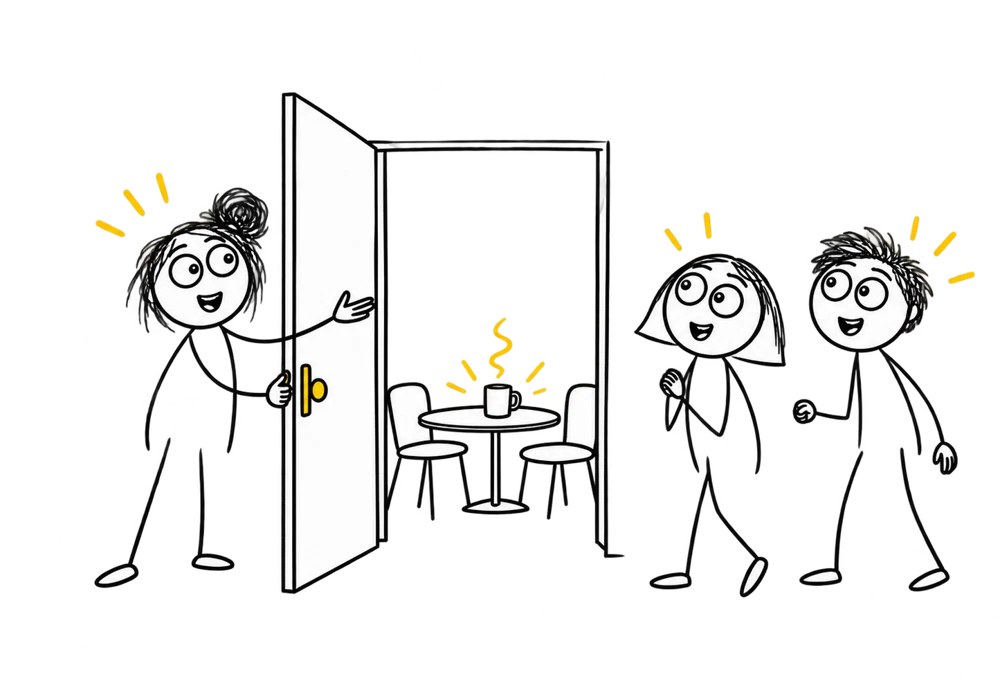
Don’t automate the reasons people choose you.
Human connection deserves a deliberate role in how a brand competes.



Human connection deserves a deliberate role in how a brand competes.
Before automating part of a customer experience, I think a business should ask a question that often gets too little attention. What does this moment contribute to someone’s willingness to choose us? The answer might be very little. Perhaps the customer simply wants to change a booking, check a delivery or find a factual answer. Helping them do it quickly and independently can be excellent service.

An interaction can be valuable because someone notices a concern the customer has struggled to express, explains an unfamiliar choice or takes responsibility when the usual process fails. If customers value that understanding and judgement, the decision to automate needs to account for what the business could lose as well as what it might save. That makes human connection a brand question about why people choose you and how you earn their confidence.
Understanding
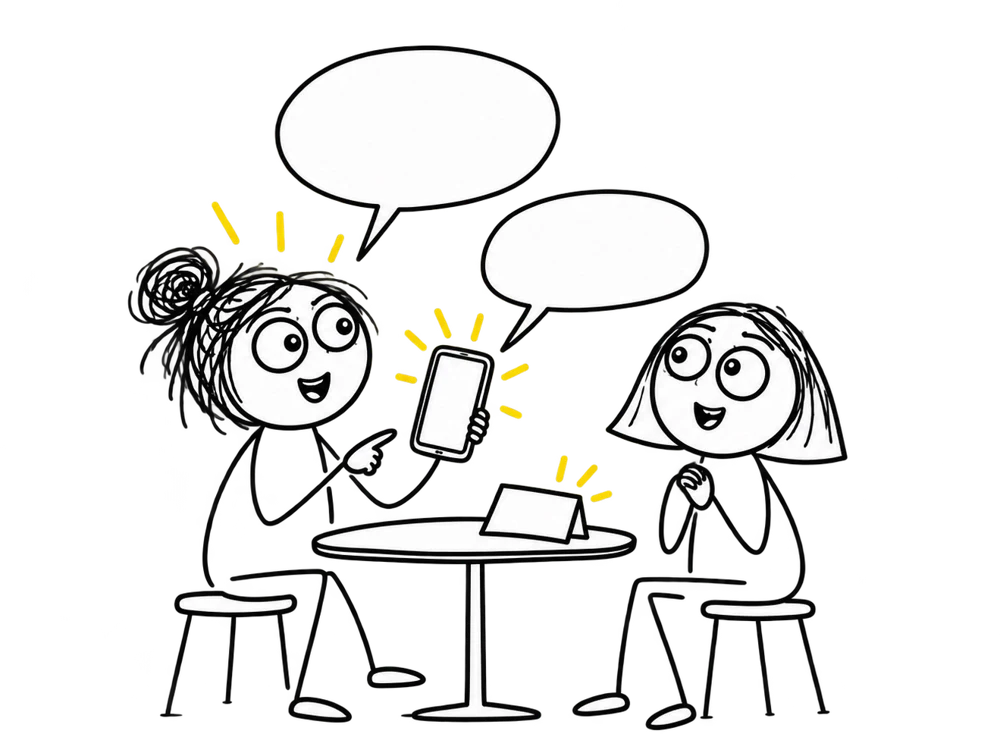
A useful conversation can help clarify what someone is trying to achieve, what is worrying them and what they have not yet decided.
What does this moment contribute to someone’s willingness to choose us?
The answer might be very little.
Judgement
Explaining a trade-off, challenging an assumption or identifying a risk the customer has not considered.
Responsibility
A named contact with the authority to resolve an issue can make a promise more believable.
Continuity
The customer does not have to explain the whole situation again at every encounter.
AI can help produce more content, more outreach and more responses. When similar tools are widely available, access to them alone is unlikely to explain why a particular customer should prefer your business. The same applies to a warm tone or a message that includes someone’s name. Those can be useful elements of communication. They do not establish that the business understands the person, has relevant expertise or will take responsibility for an outcome. My hypothesis is that, as polished communication becomes easier to produce, businesses will need to work harder to make the substance behind it assessable.
That substance could include a recognisable point of view, original evidence, useful tools or a product that works exceptionally well. It can also include access to people whose knowledge, judgement and conduct give the brand meaning. This is a proposed strategic response, not proof that every market is turning away from digital. The opportunity depends on what customers value and what competitors actually provide. Ask where a real relationship could make your business more useful, more credible or more difficult to replace. Then invest in making that relationship worth having.

Richard Harpin’s publicly shared fourth step, bricks, clicks and paper, advocates combining physical presence, digital channels and direct communication. His explanation describes those channels working together, which is a useful challenge to the habit of treating every opportunity as another digital campaign. [1] I would also ask what the experience through each channel should help someone understand or do, and where contact with the business could make its promise more credible.
A physical letter can be thoughtful and useful or become another piece of unwanted mail, just as an event can offer a worthwhile discussion or an evening of sales pitches. A video call can involve real attention and excellent judgement too. Choosing the medium matters, but the relationship depends on what people experience through it and whether that helps with something they care about.
Advertising can introduce a business, build familiarity, explain an offer and support demand. A good digital campaign can be commercially valuable. It is still useful to distinguish being noticed from being understood, trusted and chosen. Those do not become the same thing because a platform reports a conversion. Digital returns can become fragile when a business depends heavily on one platform, one source of traffic or a short-term attribution model. That is a conditional risk, not a claim that digital marketing is inherently fickle or unprofitable.
The deeper issue is whether the business is also developing things it can keep using: a recognisable brand, a useful body of evidence, permission to maintain contact and relationships customers value. Even then, an email list is not automatically a relationship. Continued access needs to be earned through relevance, usefulness and respect for people’s choices. The commercial question is what the business is building while it acquires attention, and whether that strengthens its position over time.
A useful conversation can help clarify what someone is trying to achieve, what is worrying them and what they have not yet decided. That requires listening and the willingness to change the response. A meeting that only repeats publicly available information creates little reason to value the person involved. Make room for questions that reveal context. Let what you learn affect the recommendation, the offer or whether you should proceed at all.
Customers can often find information themselves and still need help deciding what it means for their circumstances. An expert earns their place by explaining a trade-off, challenging an assumption or identifying a risk the customer has not considered, supported by relevant competence and sound reasoning. Make that judgement visible by explaining how you reached a recommendation, what remains uncertain and what would change your view.
People need to know who will act when something falls outside the expected process. A named contact with the authority to resolve an issue can make a promise more believable. A named contact who can only pass the issue on may add another layer of effort. Technology can support accountability through good records, clear ownership and timely information. The business still needs to decide who is responsible and ensure the customer can reach appropriate help.
A continuing relationship becomes useful when the business understands the context and the customer does not have to explain the whole situation again at every encounter. That depends on people and systems working together through stable teams, useful handovers, accurate records and appropriate permission to retain information. It should also work when one person is away, so the reliability becomes associated with the business rather than depending on one exceptional employee.
Gartner’s 2026 survey of 3,566 B2B and B2C customers found that 50% said GenAI made service interactions easier, while 87% considered access to a human agent essential when companies used it. Both findings matter. They support convenient technology with an available route to a person. [2]
A separate Gartner survey of 632 B2B buyers, conducted in 2024 and published in 2025, found a preference for an overall rep-free buying experience. It also found that buyers preferred seller input for tasks requiring contextual judgement about fit. These are different samples and questions, not opposing results from one experiment. [3] The implication I take is to make human interaction worth choosing and available when it matters. Forcing people to speak to someone before they can obtain basic information can undermine that aim.
3,566 B2B and B2C customers [2]
632 B2B buyers, conducted in 2024 and published in 2025 [3]
A preference for an overall rep-free buying experience
Buyers preferred seller input for tasks requiring contextual judgement about fit
Research also challenges the assumption that using AI necessarily damages an interaction. A study published in The Quarterly Journal of Economics examined AI assistance for customer-support workers in one firm and found gains in productivity and aspects of customer interaction. It studied assistance to people, not proof that replacing them produces the same result. [4] Human connection and useful technology can reinforce one another. The strategic choice is what the business enables its people to contribute.

There is another way human presence can matter. It can help customers understand the judgement and effort that an otherwise abstract claim represents. Research by Buell, Kim and Tsay used foodservice experiments to examine operational transparency. Making work visible affected perceived effort and service value, with effects on performance in those settings. The finding is specific; it does not establish that every business should expose its process or copy the same intervention. [5] It does suggest a useful question. Where would making the work more understandable help a customer assess your value?

An interior design practice might explain the decisions behind a completed space, while a consultancy could let a prospective client experience how it examines a problem. A manufacturer might provide appropriate access to expertise or a demonstration. These are possibilities to investigate, with confidentiality and practical value in mind; the point is to make the expertise easier to assess rather than put on a performance of how busy the team is.
Values become more believable when they affect a decision someone can experience. Honesty might mean acknowledging uncertainty or advising against unsuitable work, while consideration could mean helping a customer understand an unfamiliar process. Taking responsibility may require someone to own a difficult problem rather than close the conversation by referring to a policy. Those choices need time, authority and sometimes a willingness to decline revenue, which is why the values need to fit the way the service and business actually operate.
If the business wants to be known for personal expertise, it needs to provide meaningful access to expertise. If it wants to be known for simplicity, it needs to reduce work for customers. If it wants to be known for care, it needs to support people to notice and respond to relevant needs. That connection between the intended brand and the operating choices is where I would focus the strategic work.
For my own consultancy, this thinking supports a connected experience. The website should help someone understand the commercial role of brand and assess my point of view. Articles and project evidence should provide value before someone makes contact. For people who want to go further, a direct conversation gives us room to examine their situation, question assumptions and work out whether I can help.
A useful conversation starts with a real question and enough context to examine it properly. It should help someone understand what needs attention and what a worthwhile next step could be. Any follow-up should reflect what we discussed and happen with permission. The same principle can apply in other businesses. Give digital exploration and human interaction distinct jobs, then connect them around the customer’s need.
“We will always be available” is easy to write and difficult to sustain. A human-centred brand still needs boundaries, capacity and a commercially sensible offer.
Decide where access matters most and what level of access you can reliably provide. Some situations may justify a named adviser. Others may be served well by a team, a scheduled review, a group format or clear self-service with a route to help. Give staff the skills, time and authority the promise requires. Useful tools can reduce administrative work. Check whether the saved time actually supports better customer outcomes or is simply absorbed by additional workload. Avoid making the founder the only person capable of delivering the experience. If the brand depends on judgement, develop that judgement across the team and create handovers that preserve context.
The goal is a relationship the business can sustain and the customer has reason to value. More contact is not automatically better. Relevant, dependable contact can be.
An event attendance figure or a positive comment does not establish commercial value. Neither does a high digital return explain every influence on a buying decision. Agree what an interaction is intended to change. It might help someone understand the offer, assess fit, make a decision, resolve an issue or develop confidence in the people involved.
Then examine evidence suited to that job.
| Intended contribution | Evidence worth collecting | What it cannot establish alone |
|---|---|---|
| Better understanding | Unprompted explanations of the offer and its relevance | Future willingness to buy |
| More useful expert access | What decision the person could make afterwards | The independent financial effect of the conversation |
| Stronger confidence | Reasons given for considering, choosing or recommending the firm | That rapport outweighed price, quality or availability |
| More dependable resolution | Resolution, repeated effort, elapsed time and ownership | Long-term loyalty from one successful incident |
| A sustained relationship | Permission-based continued participation, repeat work and relevant referrals | Causation without accounting for other influences |
Compare outcomes with the time and cost involved, including staff effort and the customer’s time. Where appropriate, test a format against a reasonable alternative. Record other changes that might affect the result. Ask what people found useful before asking whether they enjoyed the experience. Enjoyment can matter, but the commercial role should be more specific than “people seemed to like us”.
Take one customer journey and work through these questions.
The practical component for this article is loading.
Start with one important moment. Understand what people value, improve the experience and learn from what happens. The opportunity I see is to make human understanding and judgement a deliberate source of commercial advantage, supported by technology and backed by the way the business operates. Before making your business easier to run, make sure you understand what makes it worth choosing. Then build around it.
Back to topSources
Continue the thinking

Platform dependence11 min read
Social platforms can introduce people to your business, but what remains when reach changes? Build recognition, proof and relationships that stay useful beyond any one channel.
Keep the human part
I can help identify where human understanding, expertise and experience could support your commercial position, then connect those choices to the brand and the work your team delivers.