
The thinking has to survive the doing.
A useful direction changes the work.



A useful direction changes the work.
A workshop can go well, with people recognising the business in the new position and happily approving the language, only for the work to drift when everyone returns to their jobs. The website partner still needs a brief, sales still needs a proposal and a new colleague explains the services using whatever version they have heard most often. Unless the direction helps people make those everyday decisions, the familiar approach remains easier to use. Customers then encounter work that barely reflects what everyone agreed in the room.
Take the illustrative engineering consultancy from the previous article, whose chosen focus is helping manufacturers make informed decisions about changes to an existing facility. It wants to be considered early enough for its assessment to influence a significant commitment. That focus should shape the offer, evidence and way customers get started, rather than appearing only in a headline. This is an example for discussion, not a client project.
| Strategic consequence | What it could change in practice | What to check |
|---|---|---|
| Be relevant before a production change is committed | Explain the situations in which an initial assessment is useful | Can a prospective client recognise when to involve the team? |
| Make the first engagement understandable | Describe inputs, participants, outputs and exclusions | Can someone explain what they would be commissioning? |
| Show judgement under comparable constraints | Select cases that explain decisions and uncertainty | Does the evidence support the claimed expertise? |
| Make the promise usable in a sales conversation | Create questions and proposal examples around the buying situation | Can the conversation adapt while preserving the same proposition? |
| Deliver the promised decision support | Agree responsibilities, communication and the handover | Does the client receive something they can use for the decision? |
The precise solution would need evidence and operational agreement. The point is to make the relationship visible. If a strategy cannot affect a choice like these, ask whether it is sufficiently specific or whether it has been translated properly.
Elite Home Staging already had a clear commercial direction and substantial delivery capability. The brand needed to communicate more of that value. Different audiences were receiving much the same broad story, while the services and evidence needed a clearer relationship. The work connected leadership conversations and brand choices to a guide, identity, website and supporting communication through 9 Designs. [1] That illustrates an important distinction. The task was to carry an existing business direction more effectively into the market. It would be inaccurate to describe the business as having no strategy before the engagement.
Jewel Toned Interiors had an established reputation and expertise. Its website needed to communicate that depth, help commercial and private audiences find relevant information and explain when and how to involve the firm. The engagement focused on the digital experience and its communication, building from an existing brand. [2] These are different kinds of work. A useful approach recognises the decisions already made and concentrates effort where the brand can become more useful.

Project account
Carry an existing business direction more effectively into the market

Project account
The digital experience and its communication, building from an existing brand
“Make it premium” leaves a great deal open to interpretation. So does “bring the strategy to life”.
A useful brief explains the customer situation, what the work should help the business achieve and the strategic choice it needs to carry. It should also make the constraints visible, whether those concern an identity worth retaining, a regulated claim or an operational limit on the promise. Designers and writers can make better decisions when they understand that context and see relevant examples, such as a proposal introduction or case study showing how the position should affect the language and evidence.
The aim is to make judgement easier, with enough room for specialists to do good work.
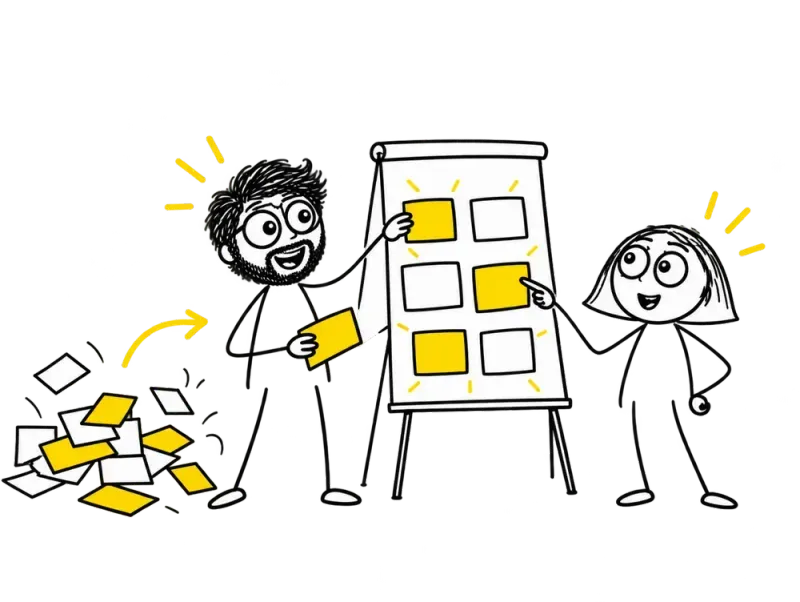
A founder speaking to an investor, a salesperson answering a practical question and a website explaining an offer need different ways of communicating. Agree which elements should remain consistent, such as the audience, promise, visual identifiers and standards of evidence, while allowing the depth, sequence and examples to suit the situation. Teams need accessible guidance and someone responsible for maintaining it, so they can apply the direction without copying the same positioning statement into every piece of work.

This is the role of shared direction in my work. It helps people represent and deliver the brand with greater confidence. It is not a separate promise to solve every issue of organisational alignment.
A business that promises considered advice but rushes every enquiry into a generic sales call creates a mismatch. A firm claiming to simplify complexity needs to examine whether its proposals and handovers actually help a client understand the next decision. These are useful things to examine because the experience gives the communication credibility, or undermines it.
Brand work can help identify a gap between the promise and experience, but the people responsible for delivery need to confirm what is feasible and carry the change through. A consultant writing a better promise cannot make it operationally true. Agree who owns each action, what happens next and how completion will be checked, so a useful recommendation does not remain something everyone supports and nobody takes responsibility for.
For one priority, complete this short decision trace.

The practical component for this article is loading.
Use the trace in a brief, a review or a conversation with an agency. When someone proposes a change, ask how it helps the customer and the agreed commercial job. If the original choice no longer makes sense, revisit it rather than defend consistency for its own sake.
As the work meets real conversations, notice where prospects need more explanation, which evidence they use and what the team finds difficult to apply. Those observations deserve different consideration from a colleague’s preference about a colour or layout. Review the important choices at a pace that suits the business and update the examples as you learn, keeping enough direction to work consistently while remaining willing to change an assumption the evidence no longer supports.
This is why I am interested in the connection between the business question and the work people experience. I can work alongside a client’s team and existing partners, with creative and digital delivery through 9 Designs where useful. The aim is to help the direction survive each handover and become something the business can actually use.
Back to topSources
Continue the thinking

Before investing7 min read
A new website, launch or expansion can expose questions the business hasn’t settled. Here’s how to separate what you know from what you’re assuming before committing the budget.
Carry the strategy through
We can start with the direction you already have and identify what needs to happen next.